The People’s Report Provides a Roadmap to End the Death and Violence at the Fulton County Jail
Posted by Southern Center for Human Rights on April 4, 2025FOR IMMEDIATE RELEASE
Media Contact: Kathryn Hamoudah 404/688-1202 or [email protected]
Atlanta, GA—The Southern Center for Human Rights (SCHR) released The People’s Report, the culmination of the initial phase of The People’s Process, a community-centered initiative modeled after international human rights input mechanisms as a response to Fulton County’s refusal to engage the public on the Department of Justice’s (DOJ) damning findings concerning the unconstitutional and inhumane conditions at the Fulton County jail under Sheriff Patrick Labat and resultant Consent Decree.
The People’s Process was organized to ensure that people affected by the Fulton County jail crisis would be educated about and considered when designing solutions. The Final Report contextualizes Fulton County’s carceral footprint and offers recommendations for prioritizing solutions needed to address the long and well documented issues at the jail.
In 2022, Fulton County leased beds to ACDC. Since then, there have been more than 30 reported deaths during Sheriff Labat’s tenure, 16 of which occurred since the transfers from Fulton County facilities to ACDC, demonstrates that the additional bed space and supposed superior condition of the ACDC facility are not sufficient to overcome the numerous constitutional and human rights violations documented in the DOJ report. In fact, two people died in Fulton County’s custody in the Atlanta City Detention Center since the lease went into effect.
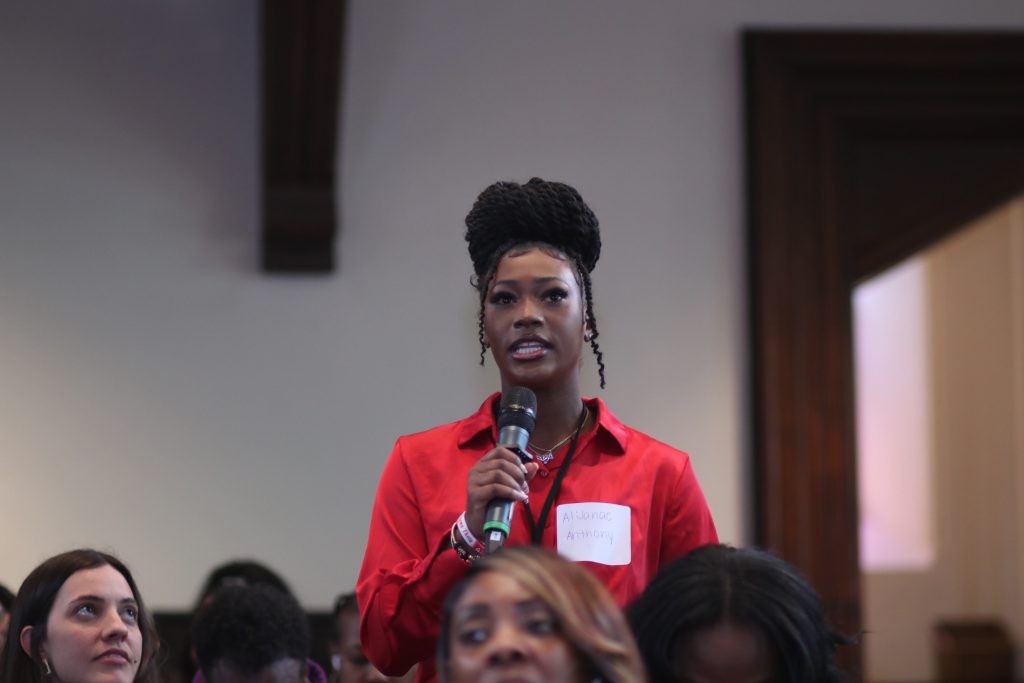
From January to March, attendees at three assemblies participated in live polling regarding the prioritization of reforms, many of which are included in the Consent Decree. Of note, one hundred percent of participants believed that incarcerated children should be prioritized for release and that banning solitary confinement should also be a top priority. Two-thirds of those polled believed that ensuring that the jail is clean, sanitary and free of pests should be the top priority when tackling inhumane conditions with the remaining third believing ensuring lawfully required grand jury inspections of the jail was the most important first step.
Several people connected to the jail either through incarceration, legal representation, or providing healthcare to people at the jail gave testimony highlighting the numerous constitutional and human rights violations:
- K.C., a Black, pregnant woman was incarcerated at the Union City jail and Fulton County jail from September 2022 to February 2023. Upon arrest, while incarcerated at the Union City jail, she was shackled to a chair during an investigator meeting and was left without medical attention for a day despite experiencing contractions and Covid. Her condition worsened, yet she was only given Tylenol and prenatal medications. The living conditions were dire, including women being on lockdown for 23 hours a day. Overcrowding forced many to sleep on the floor, and the cells were infested with ants and roaches. She was left with ants covering her body with no relief provided by medical personnel or officers. While pregnant she was frequently moved to different cells and was forced to carry her belongings long distances. She also did not receive proper nutritional support, including meals suited for pregnancy. At Fulton County jail, she faced extremely unsanitary conditions, with feces and mold present in the holding cell. The booking pod was cold and lacked adequate food and water. She continued to be deprived of essential prenatal medications throughout her stay. The overall environment was hazardous to her well-being and the health of her unborn child.
- L.M. is a trauma nurse at Grady Hospital and spoke about the common types of cases her patients from Fulton County jail experienced. One of L.M.’s patients was a victim of rape while he was incarcerated pretrial. The young man’s mother was not able to pay his bond of $100, so he remained in the Fulton County jail. Had his mother been able to afford to pay his bond, he would have been released and likely would not have experienced the trauma of rape. L.M. stressed how many of her patients have been sitting in jail for extended amounts of time because they either cannot afford to pay their bail/bond or because they have been locked up pretrial without bond. L.M. also had several patients from the jail whose genitals were infested with lice, bed bugs, fleas, and ants. This is a common occurrence found in patients that arrive at Grady Hospital from the Fulton County jail.
- B.C. is a Black man who was incarcerated at the Fulton County jail due to his activism and community organizing efforts. During his time there, he witnessed officers inflicting violence on individuals, rampant mold, infestations of insects and rodents, and overcrowded conditions. B.C. characterized the environment as dehumanizing, where basic needs were frequently neglected, resulting in a daily struggle for dignity. His experience brought to light the targeted systemic problems and the urgent need for accountability in correctional facilities.
These testimonies serve as a powerful reminder of the human cost of incarceration and the necessity of advocating for change to ensure humane treatment for everyone.
“Due to the County’s inaction, the people have come together to help forge a path forward that focuses on remediating the human rights abuses at the jail,” said Tiffany Williams Roberts, SCHR’s Public Policy Director. “The narrow focus of many elected officials on jail leases and sales—despite the broad edicts of the Consent Decree—causes concern that more people have to die before they are forced into meaningful action.”
SCHR has filed four lawsuits concerning the inhumane conditions at the Fulton County jail over the span of more than 30 years: Stinson v. Fulton County Bd. of Comm, Foster v. Fulton County, Harper v. Fulton County, Georgia, and Georgia Advocacy Office. v. Labat.
The People’s Process will continue to ensure public input concerning the jail. More information can be found at www.schr.org/peoplesprocess.
The People’s Process partners include Women on the Rise Georgia, Atlanta Community Support Project, Southern Poverty Law Center, All of Us or None Atlanta, Legal Action Center, Color of Change, Stop Criminalization of Our Patients, Color of Change, the Multifaith Initiative to End Mass Incarceration, and Professor Justin Hansford of the United Nations Permanent Forum on People of African Descent