Introducing a Bolder Vision for our Next 50 Years

Who is sentenced to death is shaped far less by facts, but by race, poverty, geography, and access to competent legal representation.
Race, socioeconomic status, the county in which the alleged offense was committed, and the quality of the attorneys ultimately play the most decisive roles in who receives a death sentence in the U.S. The evidence is clear: the death penalty does not make our communities safer.
For 50 years, the Southern Center for Human Rights (SCHR) has stood at the forefront of capital defense in the Deep South. We have argued and won five death penalty cases before the United States Supreme Court—four of them challenging entrenched racial discrimination in capital trials. We secured a landmark ruling from the Georgia Supreme Court outlawing the use of the electric chair and deeming it “cruel and unusual punishment.” These victories are not symbolic; they are life-altering.
Today, SCHR continues to lead litigation and advocacy to stop new death sentences, prevent executions, and abolish the death penalty. We do this work because every execution is an irreversible act of state violence. Justice demands better.
In every capital case, we bring relentless advocacy and deeply individualized representation. In the face of the most severe punishment the state can impose, we insist on what the system so often denies: care, dignity, and recognition of our clients’ full humanity.
SCHR provides direct, unwavering representation to people facing the death penalty in Georgia and Alabama.
People sentenced to death are routinely portrayed as monsters beyond redemption. That narrative is not only false, it is dangerous.
For 50 years, we have sat with our clients. We have learned their stories. The people condemned to die are our neighbors who are often poor, who live with intellectual disabilities, severe mental illness, or the unhealed wounds of a lifetime of trauma and abuse.
The death penalty is levied not against the “worst of the worst”, but against our country’s most marginalized and vulnerable community members.
In every capital case,we do what the state refuses to do: see the full human being. We bring their whole story into the light—not to excuse harm, but to reject the myth that anyone is defined by a single act. We demonstrate the inherent humanity in all our clients, forcing the legal system to confront the person it seeks to erase. We defend our clients without condition, without apology, and without exception.
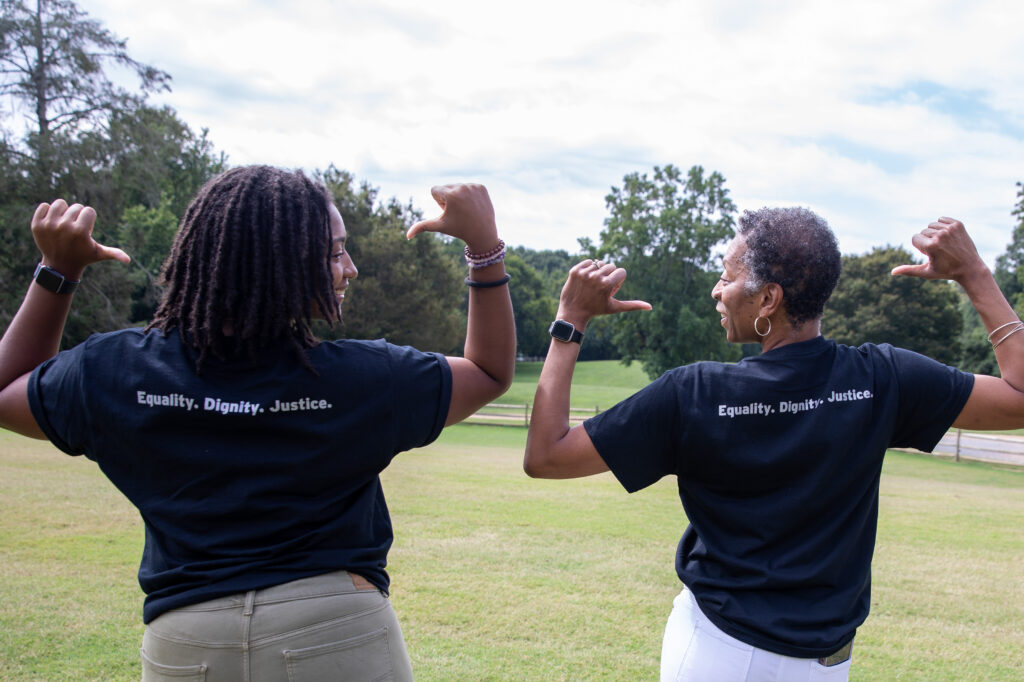
Become a monthly donor today and join our Pillars of Justice Society in standing with us year-round in the fight for equality, dignity, and justice.