THE PEOPLE'S PROCESS
On November 14, 2024, the U.S. Department of Justice (DOJ) Civil Rights Division released its findings from an investigation of the Fulton County Jail (FCJ), uncovering widespread human rights abuses. Despite Fulton County and the Fulton County Sheriff entering into a Consent Decree with the DOJ to address the findings in the report, the County has remained silent about the next steps and has not sought community involvement about the future of the Jail.
On November 20, 2024, the Southern Center for Human Rights (SCHR) reached out to the Fulton County Board of Commissioners urging public input. After receiving no response, SCHR, alongside community partners, launched The People’s Process—an initiative focused on community engagement and inspired by international human rights input mechanisms—to gather testimony, demand accountability, and generate recommendations to address the human rights abuses highlighted in the DOJ’s report.
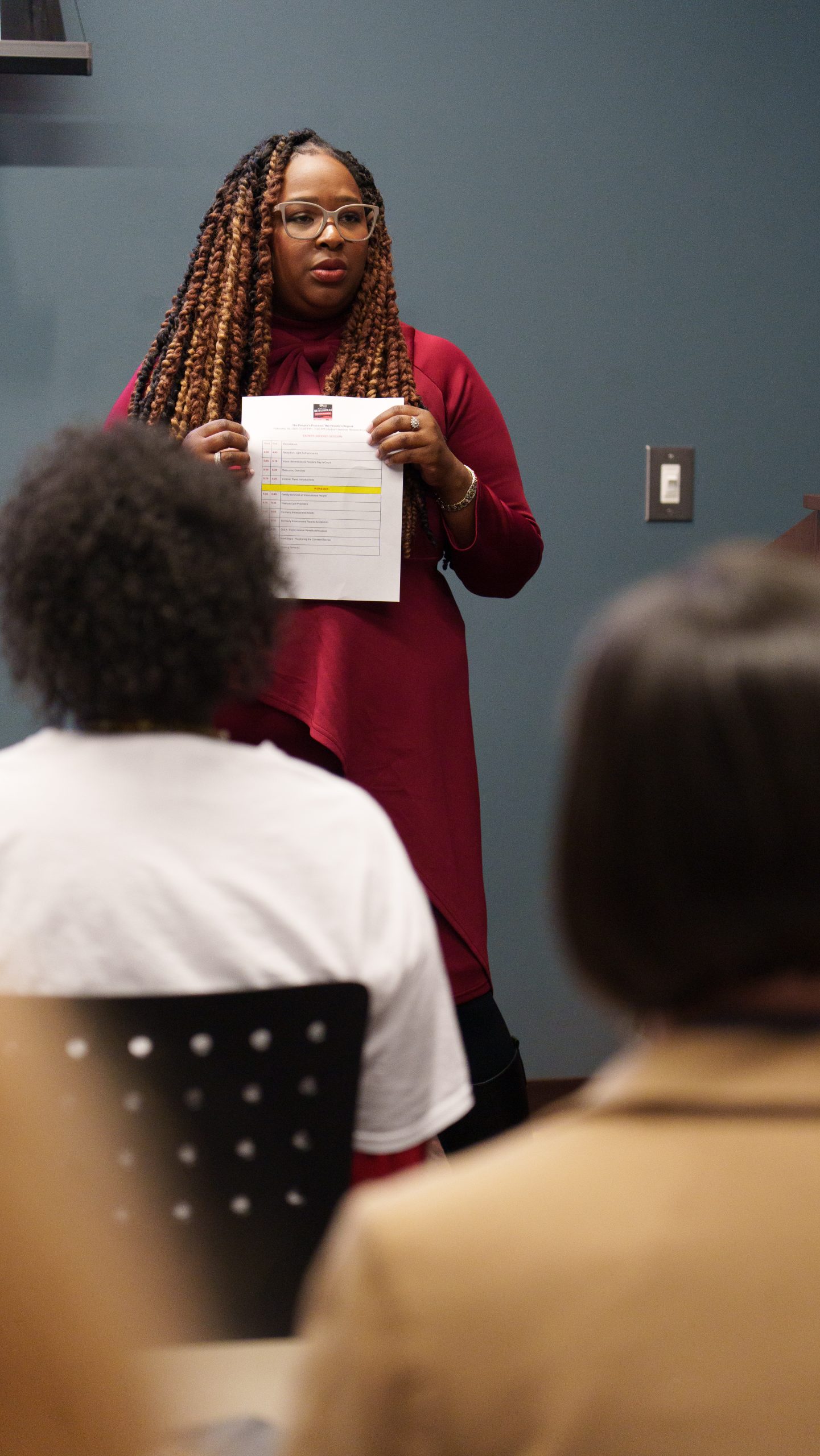
Through a series of assemblies and webinars, the community was able to engage in ongoing public education about the Jail and the Consent Decree. A public reporting day was held at the Auburn Avenue Research Library in Atlanta, Georgia on Tuesday, February 18, 2025. This event began with a strategy session for community organizations and concluded with witness testimonies before members of the Georgia General Assembly, the Atlanta City Council, and the Fulton County Board of Commissioners.
The People's Process / Final Report
This comprehensive document aims to pave the way for transformative changes in our criminal legal system, with a specific focus on improving conditions and policies for those incarcerated in Fulton County. It encapsulates extensive research and analysis that has been carried out over the past months, incorporating diverse viewpoints and expert testimonies. We believe this report will serve as a crucial tool for policymakers, providing actionable recommendations and solutions tailored to address the challenges faced by the incarcerated population. We hope it will inspire meaningful dialogue and foster collaboration among legislators, advocacy groups, and community leaders to drive systemic change. We are committed to transparency and community engagement throughout this process.
Following the release of the report, a series of discussions and workshops will be organized to foster an open exchange of ideas and ensure that the voices of those most affected remain at the forefront of our efforts. We look forward to your continued support and active participation as we embark on this journey towards justice and equity for all.