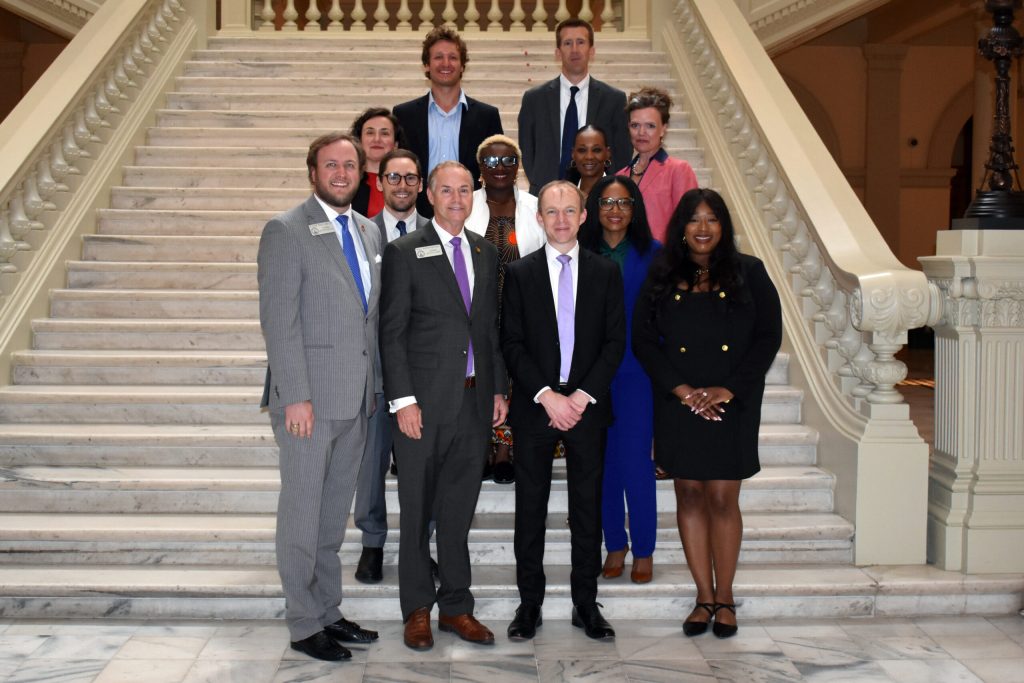
Governor Kemp Signs Bill to Protect People with Intellectual Disability from the Death Penalty
Posted by Southern Center for Human Rights on May 13, 2025Media Contact: Kathryn Hamoudah 404/688-1202 or [email protected]
The Southern Center for Human Rights (SCHR) is deeply grateful that HB 123 has been signed into law and will protect those with intellectual disability from being sentenced to death.
For the past two decades, SCHR, along with the broader capital defense and disability rights communities, has worked tirelessly to change a law that puts people with intellectual disability at greater risk of execution than any other state.
Despite the U.S. Supreme Court’s 2002 ruling in Atkins v. Virginia that executing people with intellectual disability amounts to cruel and unusual punishment, Georgia remained the only state in the country that forces people to prove their disability beyond a reasonable doubt to avoid execution.
Georgia was also the only state that asks a jury to decide both guilt and intellectual disability at the same time, making it more difficult and confusing for jurors to evaluate each separately.
HB 123 is a long overdue reform that makes two critical changes to Georgia law:
- It lowers the standard of proof from beyond a reasonable doubt to preponderance of the evidence, aligning Georgia with nearly every other state.
- It ensures that determining intellectual disability is separate from determining guilt in capital cases. The Supreme Court has said that evidence about the crime is irrelevant to the determination of intellectual disability. Separating the determinations of guilt and intellectual disability will improve accuracy and reduce bias in the decision-making process.
SCHR’s executive director Terrica Redfield Ganzy’s comments on today’s historic passage:
“In our work, we know that progress doesn’t happen overnight. The signing of HB 123 into law is a testament to the persistence, steadfastness, and community behind this effort. This law will undoubtedly save lives. We are thankful we had Chairman Werkheiser as a champion and partner in this monumental victory.”
SCHR will host a reception this summer, to honor the many unsung advocates who long have been advocating for this change.
Since 1976, SCHR has had a measurable impact on transforming the criminal legal system by challenging unconstitutional and unconscionable practices across the Deep South. SCHR has argued and won five death penalty cases at the United States Supreme Court, four of which challenged profound race discrimination in capital trials. SCHR won a decision from the Georgia Supreme Court outlawing the use of the electric chair and deeming it “cruel and unusual punishment.”